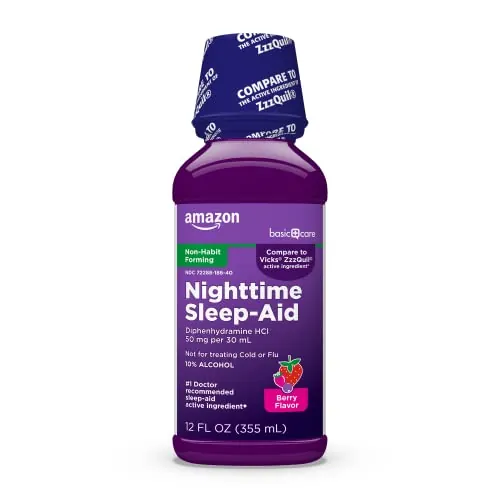
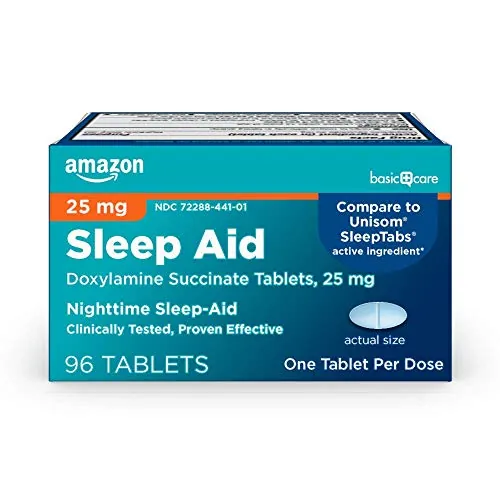
Both products carry safety considerations typical of first‑generation antihistamine sleep aids, including potential next‑day drowsiness. The liquid has a safety score of 66, with reviews mentioning mixed side effects such as occasional headaches or mild grogginess. It also contains alcohol and high fructose corn syrup, which some users may wish to avoid. The tablets have a slightly higher safety score of 68 but also come with reports of pronounced next‑day brain fog at full doses for some individuals. Neither product’s data list serious safety issues beyond these common concerns. Used as directed for occasional sleeplessness and not as a long‑term solution, both appear comparably safe within their category, with individual tolerance varying.
Comfort encompasses both taking the product and how users feel afterward. The liquid has a comfort score of 63; reviewers often call it easy to swallow but describe the taste as very sweet or similar to cold medicine. Some users appreciate the mixed berry flavor, while others do not. The tablets score slightly higher at 64 and are extremely small, which many find easy to take, with minimal taste. However, some reviewers mention next‑day grogginess at full doses, affecting perceived comfort. Overall, the tablet format avoids flavor complaints and offers simple dosing, while the liquid may feel smoother going down for those who dislike pills but accept the flavor.
Both products score highly for ease of use, but the tablets hold the advantage. The liquid, at 88, offers a clear dosing cup and a straightforward measured amount, though users must handle a bottle, open it, and measure each dose. The tablets score 92, reflecting the simplicity of taking a single, tiny pill with no measuring required. Several reviewers note splitting tablets along the scored line, which can add flexibility without much complexity. For travel, storage, and quick use before bed, the tablets are more convenient. Users who strongly dislike swallowing tablets may still find the liquid’s familiar dosing cup and drinkable format preferable despite the extra steps.
Build quality scores are modest for both products, but the liquid scores higher at 58 compared with 50 for the tablets. The liquid’s packaging includes a sturdy bottle and dosing cup, which users describe as easy to handle and measure with. The tablet product appears more basic, with simple pill packaging that prioritizes function and cost over premium presentation. Since both are consumables rather than durable devices, build quality mostly relates to packaging usability and robustness. In practice, neither product’s build quality appears to be a major concern in customer feedback, but the liquid’s bottle and dosing accessories are rated slightly better overall.
Durability in this context refers to how well the packaging and product format hold up over time, as well as reliability of use. The liquid has a durability score of 72, suggesting a generally robust bottle and cap that withstand repeated opening and measuring. The tablets score slightly higher at 75, likely due to their resistance to physical wear and the low risk of damage when stored properly. Tablets are less likely to spill, leak, or degrade quickly under normal conditions. For users who need a product that travels well and remains stable over many uses, the tablets have a modest edge, though both should be handled according to storage instructions.
Maintenance is straightforward for both products but especially minimal for the tablets. The liquid scores 85, requiring users to keep the bottle closed, clean the dosing cup, and store it properly to avoid spills or contamination. The tablets score 90, reflecting that they simply need to be kept in their container with the lid closed and stored as directed. There is no measuring equipment to clean or liquids to manage. Users who prioritize low‑effort storage and handling, especially in shared spaces or travel situations, will likely find the tablets easier to maintain.
Portability strongly favors the tablet product. The liquid has a solid portability score of 80, but its 12 fl oz bottle is relatively bulky and contains liquid, which can spill and may face travel restrictions. The tablets, with a portability score of 95, come in a small, lightweight container that fits easily into bags or bedside drawers and is simple to carry when traveling. For users who regularly move between locations or want a sleep aid on trips, the tablet format is far more convenient and low‑risk than transporting a large bottle of liquid.