#1 Overall Winner
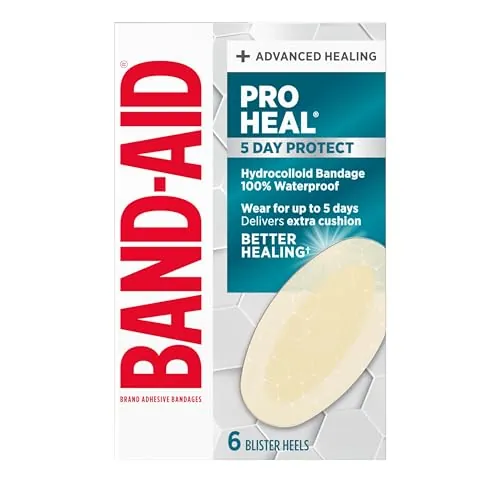
BAND-AID Brand Pro Heal 5 Day Protect Hydrocolloid Blister Bandages
- Hydrocolloid design for minor blisters, cuts and scrapes
Comparison
BAND-AID Pro Heal is strongest for minor blisters and waterproof, cushioned hydrocolloid coverage that can remain in place for several days. Band-Aid Tru-Stay Adhesive Pads are stronger for general large-area first aid, value and customer satisfaction. The main trade-off is specialised, longer-wear blister protection versus a more economical everyday wound pad.
#1 Overall Winner
Contender
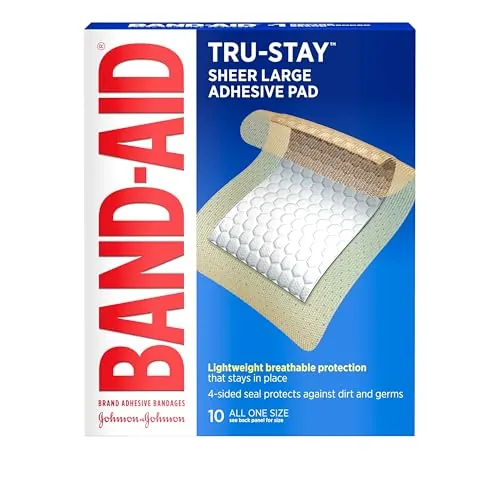
Tru-Stay is better overall for general first-aid value and broad minor-wound coverage. Pro Heal is better for users dealing with friction blisters or seeking a cushioned waterproof bandage designed for longer wear. Choose Tru-Stay for economical everyday pads and Pro Heal when its hydrocolloid format is relevant.
Overall winner
Depends on your needs
| Feature | BAND-AID Brand Pro Heal 5 Day Protect Hydrocolloid Blister Bandages | Band-Aid Brand Tru-Stay Adhesive Pads, Large Sterile Sheer Bandages | Winner |
|---|---|---|---|
| Overall score | 79 overall score | 84 overall score | Band-Aid Brand Tru-Stay Adhesive Pads, Large Sterile Sheer Bandages |
| Best use case | Minor blisters and cushioned waterproof coverage | Large general coverage for minor cuts, scrapes and burns | Depends |
| Health impact | Higher health-impact score | Lower health-impact score | BAND-AID Brand Pro Heal 5 Day Protect Hydrocolloid Blister Bandages |
| Recovery support | Higher recovery-support score | Lower recovery-support score | BAND-AID Brand Pro Heal 5 Day Protect Hydrocolloid Blister Bandages |
| Effectiveness | Higher effectiveness score | Slightly lower effectiveness score | BAND-AID Brand Pro Heal 5 Day Protect Hydrocolloid Blister Bandages |
| Evidence quality | Lower evidence-quality score | Higher evidence-quality score | Band-Aid Brand Tru-Stay Adhesive Pads, Large Sterile Sheer Bandages |
| Safety | Higher safety score | Lower safety score | BAND-AID Brand Pro Heal 5 Day Protect Hydrocolloid Blister Bandages |
| Comfort | Higher comfort score; extra cushioning | Flexible, lightweight pad | BAND-AID Brand Pro Heal 5 Day Protect Hydrocolloid Blister Bandages |
| Ease of use | Higher ease-of-use score; up to five-day wear | Daily changes when wet or needed | BAND-AID Brand Pro Heal 5 Day Protect Hydrocolloid Blister Bandages |
| Durability | Higher durability score; waterproof design | Lower durability score; mixed review feedback | BAND-AID Brand Pro Heal 5 Day Protect Hydrocolloid Blister Bandages |
| Maintenance | Higher maintenance score | Strong maintenance score | BAND-AID Brand Pro Heal 5 Day Protect Hydrocolloid Blister Bandages |
| Portability | Higher portability score | High portability score | BAND-AID Brand Pro Heal 5 Day Protect Hydrocolloid Blister Bandages |
| Value | Lower value score; 6-count pack at listed price of $4.09 | Higher value score; 10-count pack at listed price of $3.26 | Band-Aid Brand Tru-Stay Adhesive Pads, Large Sterile Sheer Bandages |
| Customer satisfaction | High satisfaction; 4.6/5 from 13,405 reviews | Higher satisfaction; 4.6/5 from 50,293 reviews | Band-Aid Brand Tru-Stay Adhesive Pads, Large Sterile Sheer Bandages |
| Warranty and support | Limited detail; slightly higher support score | Limited detail | BAND-AID Brand Pro Heal 5 Day Protect Hydrocolloid Blister Bandages |
Both products support practical first-aid routines by covering minor wounds and helping limit everyday exposure to dirt and friction. Pro Heal has the higher health-impact score and is designed to create a protected hydrocolloid environment for minor blisters, cuts and scrapes. Tru-Stay has a lower score but offers broad coverage through a large sterile pad and four-sided seal. Neither bandage diagnoses or treats medical conditions, and neither should be relied on for wounds that need professional assessment.
Pro Heal has the clearer fitness-related role because it is designed for blisters on heels and feet and adds cushioning against shoe friction. This can be useful for walking, hiking or other activity where a minor blister needs protection. Tru-Stay has no fitness-support score and is not presented as an activity-specific product, although its flexible design can cover a minor scrape. Pro Heal is the more relevant option when footwear friction is the central issue.
Pro Heal scores higher for recovery support. Its hydrocolloid material absorbs fluid, while its cushioning and waterproof seal are designed to protect minor blisters and wounds over several days. Tru-Stay also supports everyday recovery from minor injuries by covering and cushioning the area, but it is designed for routine changing rather than extended wear. These are wound-protection products, not recovery therapies, and outcomes can vary by wound type, placement and correct use.
Neither product is a broad wellness device, but both can support the simple routine of keeping basic first-aid supplies available. Pro Heal scores higher because its portable, individually wrapped format and targeted blister protection can be useful during active routines or travel. Tru-Stay is well suited to a home first-aid kit because its large pads cover common minor injuries. The wellness relevance here is practical preparedness rather than a direct health or lifestyle outcome.
Pro Heal has a small effectiveness-score lead. Its intended purpose is specialised: protecting minor blisters, cuts and scrapes with hydrocolloid material, cushioning and a waterproof seal. Customer feedback often praises comfort, blister protection and multi-day wear, although adhesion experiences are mixed. Tru-Stay also scores strongly and is designed for dependable large-area coverage of minor cuts, scrapes and burns, with a Quilt-Aid pad and four-sided seal. It is the more conventional general-purpose option. Pro Heal is stronger for blister-specific performance; Tru-Stay remains well suited to routine first aid.
Pro Heal scores higher for recovery support. Its hydrocolloid material absorbs fluid, while its cushioning and waterproof seal are designed to protect minor blisters and wounds over several days. Tru-Stay also supports everyday recovery from minor injuries by covering and cushioning the area, but it is designed for routine changing rather than extended wear. These are wound-protection products, not recovery therapies, and outcomes can vary by wound type, placement and correct use.
Tru-Stay has the higher evidence-quality score. Its claims are primarily limited to standard bandage functions, including sterile coverage, cushioning and protection from dirt and germs. Pro Heal includes manufacturer-described clinical testing related to healing and scarring versus specified comparators, alongside hydrocolloid functionality. Those statements are product claims and do not establish identical results for every user or wound. Customer reviews can indicate practical experiences with adhesion, comfort and coverage, but they are not clinical evidence. Neither listing provides extensive independent evidence detail.
Pro Heal has a modestly higher safety score, but both products are intended for minor wound care and should be used according to their package instructions. Pro Heal directions specify cleaning the wound, applying directly to skin without ointment and leaving the bandage until it begins to lift. Tru-Stay directions specify clean, dry skin and daily replacement, or replacement when wet or needed. Review feedback for both products includes occasional discomfort during removal, while Tru-Stay feedback also includes some irritation reports. Seek appropriate care for serious, worsening or infected wounds.
Pro Heal leads for comfort, supported by its higher comfort score and extra cushioning intended for blisters and friction-prone areas. Its hydrocolloid format is designed to adhere comfortably to heels, feet and other locations where movement can aggravate a minor blister. Tru-Stay is described as lightweight, flexible and breathable, and some reviewers find it comfortable to wear. However, both products have isolated feedback about strong adhesive or uncomfortable removal. Pro Heal is the better fit when cushioning inside footwear is especially important.
Pro Heal has a clear ease-of-use advantage. It is individually wrapped, waterproof and designed to remain on for up to five days, which may reduce the need for frequent changes when it stays properly adhered. Tru-Stay is also simple to apply and individually wrapped, but its instructions call for daily changes, replacement when wet or replacement as needed. Tru-Stay reviews also mention that the individual wrapping can be difficult to open. Both products should be applied to a clean, dry area according to instructions.
Build-quality scores are very close, with Pro Heal holding a slight advantage. Its construction combines hydrocolloid material, cushioning and a waterproof seal designed for multi-day wear. Tru-Stay uses a sterile Quilt-Aid pad, Tri-Ply backing and a four-sided seal in a lightweight flexible format. Customer feedback for both products is generally positive about quality, though both also receive mixed reports on adhesion. Pro Heal is better built for sealed blister protection; Tru-Stay is well constructed for conventional, flexible wound coverage.
Pro Heal has the higher durability score and is explicitly designed to stay in place for up to five days, including through handwashing and showering. Review feedback includes reports of multi-day wear, although some users report lifting edges or inconsistent adhesion. Tru-Stay has a lower durability score and is intended to be changed daily, when wet or as needed. Some users report solid staying power, while others say it may tear or fail to adhere. Pro Heal is the stronger choice for prolonged wear on a suitable minor wound.
Both are disposable, individually wrapped products that require little upkeep beyond correct application and replacement. Pro Heal leads slightly because it is designed for longer wear and can remain in place until it starts to lift naturally. Tru-Stay requires daily changes, or earlier replacement if wet or needed. Neither product requires charging, cleaning, calibration or storage beyond keeping the sealed bandages available.
Both products are highly portable because they are lightweight and individually wrapped. Pro Heal has the higher portability score, which suits carrying a few blister-focused bandages for travel, walking or activity. Tru-Stay also fits easily in a home, bag or general first-aid kit, but its larger pad format is less specialised for compact blister coverage.
Neither product offers meaningful personalisation in the way a connected health product would. Pro Heal scores higher because its blister-oriented, cushioned format is more targeted to friction-prone locations such as heels and feet. Tru-Stay's large-pad design provides broad coverage for different minor wounds, but the supplied product data does not describe adjustable settings, tailored sizing within this specific pack or other customisation features. Selection is mainly about wound type, placement and preferred coverage format.
Tru-Stay is the stronger value choice. It has a higher value score, a lower listed price of $3.26 and 10 pads per pack, compared with Pro Heal's listed $4.09 price for six bandages. Its excellent customer-satisfaction score further supports its role as an economical household staple. Pro Heal's lower value score reflects its higher per-unit cost and smaller pack, despite strong comfort, durability and ease-of-use results. Its value proposition is more specific: users who need hydrocolloid cushioning and waterproof extended wear may find the added capability relevant.
Both products come from Band-Aid, manufactured by Kenvue, and both have strong brand-trust scores. Pro Heal holds a narrow advantage in the supplied scoring. The available listings also show substantial review histories and clearly describe intended uses and application directions. However, warranty and support information is limited for both products. Brand familiarity can support buyer confidence, but product selection should still reflect the wound type, placement, skin sensitivity and the instructions provided with the bandage.
Both products have a 4.6 out of 5 rating, but Tru-Stay has the higher customer-satisfaction score and a much larger supplied review count of 50,293 versus 13,405 for Pro Heal. Tru-Stay buyers commonly praise its size, flexibility, coverage and value, while concerns include inconsistent adhesion, skin irritation and tearing. Pro Heal buyers often praise cushioning, waterproof wear and usefulness for blisters, while value, adhesion and removal generate mixed feedback. These reviews are useful buyer signals, not proof of performance for every person or use case.
Warranty and support information is limited in the supplied listings for both products. Pro Heal has a slightly higher warranty-support score, but neither product description provides substantial detail on coverage, claims processes or dedicated support arrangements. Buyers who need clarity on returns or product support should verify the retailer's current policy before purchase.
Tru-Stay Adhesive Pads earn the overall win for value, broad first-aid usefulness and customer satisfaction. Pro Heal is the more capable specialist for minor blisters because of its hydrocolloid material, cushioning, waterproof seal and longer intended wear. A well-stocked first-aid kit could reasonably include Tru-Stay for general coverage and Pro Heal for blister-focused situations.
Overall winner
Depends on your needs
Tru-Stay has the higher overall score and stronger value score, making it the broader choice for routine first-aid coverage. Pro Heal is the more specialised option for minor blisters and situations where its hydrocolloid material, cushioning and waterproof wear are the priority. The better choice depends on the type of minor wound and desired wear time.
Pro Heal is the better fit for blisters. Its hydrocolloid construction is specifically described for blisters, it adds extra cushioning, and it is designed to adhere comfortably to heels and feet. Tru-Stay can cover minor wounds, but its large sterile pad is a more general-purpose format rather than a blister-focused design.
Tru-Stay is stronger for value based on the available data. Its value score is higher, its listed price is lower, and the supplied pack contains 10 pads compared with six Pro Heal bandages. Pro Heal may still justify its higher per-bandage cost for users who specifically need hydrocolloid cushioning and multi-day waterproof protection.
Yes. Both products are described for minor cuts and scrapes, provided the area is cleaned and the product instructions are followed. Pro Heal is also described for blisters, while Tru-Stay is additionally described for minor burns. Neither product should be treated as a substitute for appropriate assessment of serious, worsening or infected wounds.
Pro Heal has the higher comfort score and is designed with extra cushioning for heels, feet and other blister-prone areas. Its waterproof construction may also reduce the need for frequent changes during daily activity. Tru-Stay is lightweight and flexible, but its comfort score is lower and reviews include mixed feedback about adhesive removal.
Pro Heal is designed to stay in place for up to five days and has the higher durability score. Tru-Stay instructions say to change the pad daily, when wet or as needed. Actual performance can vary: customer feedback for both products includes positive reports of staying power as well as reports of lifting or inconsistent adhesion.
Pro Heal scores higher for ease of use and is a practical choice when a person wants a single waterproof bandage for a minor blister or small wound. Tru-Stay is also straightforward for everyday first aid, but it requires more frequent changing. In either case, use only on clean, dry skin and follow the package directions.
The available scoring rates Tru-Stay higher for evidence quality, largely reflecting its conventional first-aid function and more limited claim set. Pro Heal includes manufacturer-described clinical testing and hydrocolloid claims, but these should not be read as proof that it will produce the same outcome for every person or wound. Reviews are personal experiences, not clinical evidence.
Check our rankings and expert guides to find the best health products for your goals.