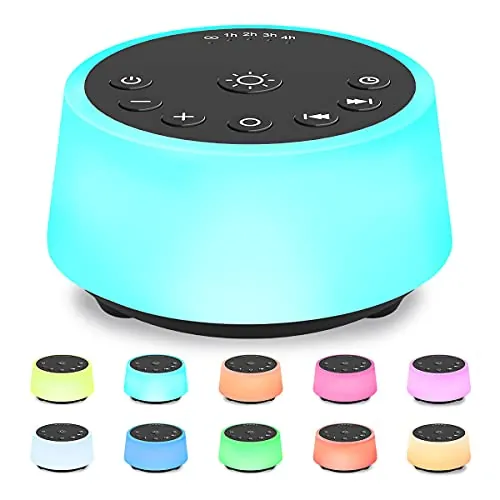
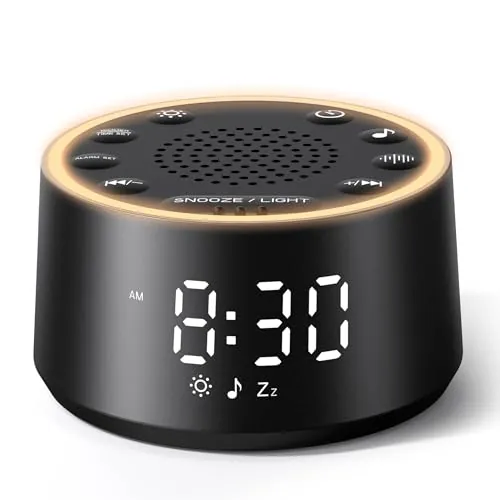
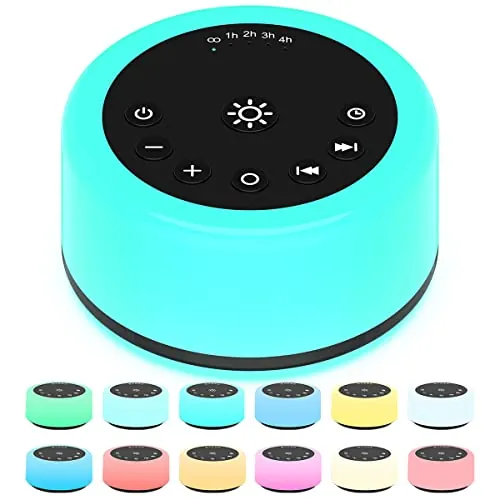
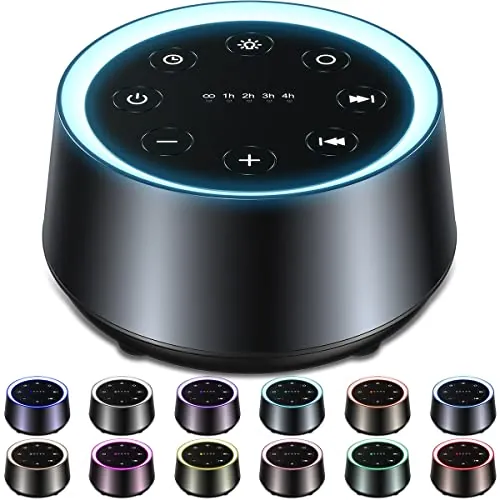
Both products support general health and wellbeing indirectly by helping users create more consistent sound and light conditions for rest. Color Noise achieves this with a wide variety of sounds and a 10‑color night light, contributing to a health impact score of 72. Dreamegg D1 Nova has a slightly lower health impact score of 68 but adds a clock and alarm, which can help users manage sleep routines without relying on phones. Neither device directly measures or treats health conditions; their impact is mainly through environmental and routine support based on user feedback rather than formal clinical evidence.
The Color Noise machine and Dreamegg D1 Nova share the same sleep support score of 90, indicating comparable strength in this area. Both offer 25 calming sounds and timer functions so users can choose continuous play or automatic shut-off. Color Noise adds a multicolor night light that many parents use for children’s sleep, while Dreamegg provides lullabies, nature alarms, and a dimmable display that may suit adults who want to avoid phone use at night. Reviews for both products frequently mention easier settling and fewer disturbances, but this is anecdotal rather than clinical. Overall, they are similarly capable for shaping a more sleep-friendly environment, with different feature sets.
For recovery-related use, such as unwinding after a stressful day or post‑workout relaxation, Color Noise has a slightly higher recovery support score (62 vs 55). Its combination of natural sounds, white noise, and soft multicolor lighting appears well-suited to creating a calming atmosphere. Dreamegg D1 Nova still offers recovery support through soothing soundscapes and a dimmable clock, which can help users wind down without bright screens. However, neither product provides targeted muscle recovery, massage, or physiological readiness features. Their role in recovery is primarily about relaxation and consistent rest routines, based on user experience rather than structured studies.
Dreamegg D1 Nova scores higher for wellness support (82 vs 78), reflecting its alignment with broader daily routines. The built-in clock, dimmer, and gentle alarm tones encourage users to separate sleep from smartphone use and to wake more gradually, which many reviews appreciate. Color Noise still contributes meaningfully to wellness, especially for families wanting a flexible sound and light device for bedtime, reading, or relaxation. Its multicolor night light can set different moods, and portability supports use in multiple rooms. Overall, Dreamegg is stronger for integrated sleep–wake routines, while Color Noise excels as a simple, calming sound-and-light tool used across the home.
Effectiveness scores are high for both products: 89 for Color Noise and 86 for Dreamegg D1 Nova. Color Noise’s effectiveness is driven by a diverse sound set (white noise, fans, rain, sea, and other nature sounds), robust volume range, night light options, and rave user feedback about helping adults and children fall asleep in noisier environments. Dreamegg D1 Nova’s similar sound library, plus tailored lullabies and nature sounds, supports strong effectiveness as well, with many users reporting easier settling and more restful nights. The small score difference suggests both perform well for their main goal of providing soothing background sound, with Color Noise having a slight edge on value-adjusted performance.
For recovery-related use, such as unwinding after a stressful day or post‑workout relaxation, Color Noise has a slightly higher recovery support score (62 vs 55). Its combination of natural sounds, white noise, and soft multicolor lighting appears well-suited to creating a calming atmosphere. Dreamegg D1 Nova still offers recovery support through soothing soundscapes and a dimmable clock, which can help users wind down without bright screens. However, neither product provides targeted muscle recovery, massage, or physiological readiness features. Their role in recovery is primarily about relaxation and consistent rest routines, based on user experience rather than structured studies.
Evidence quality scores are modest for both devices: 61 for Color Noise and 65 for Dreamegg D1 Nova. This reflects that most of the support comes from customer reviews and practical design rather than formal clinical trials. Dreamegg scores slightly higher, possibly due to longer brand presence and clearer communication about how its timer, dimmer, and alarm features fit into sleep routines. However, neither product provides medical-grade evidence that it improves sleep outcomes. When considering these devices, users should treat positive reviews as helpful anecdotes rather than scientific proof and see them as tools for shaping the sleep environment, not as therapies for medical sleep disorders.