#1 Overall Winner
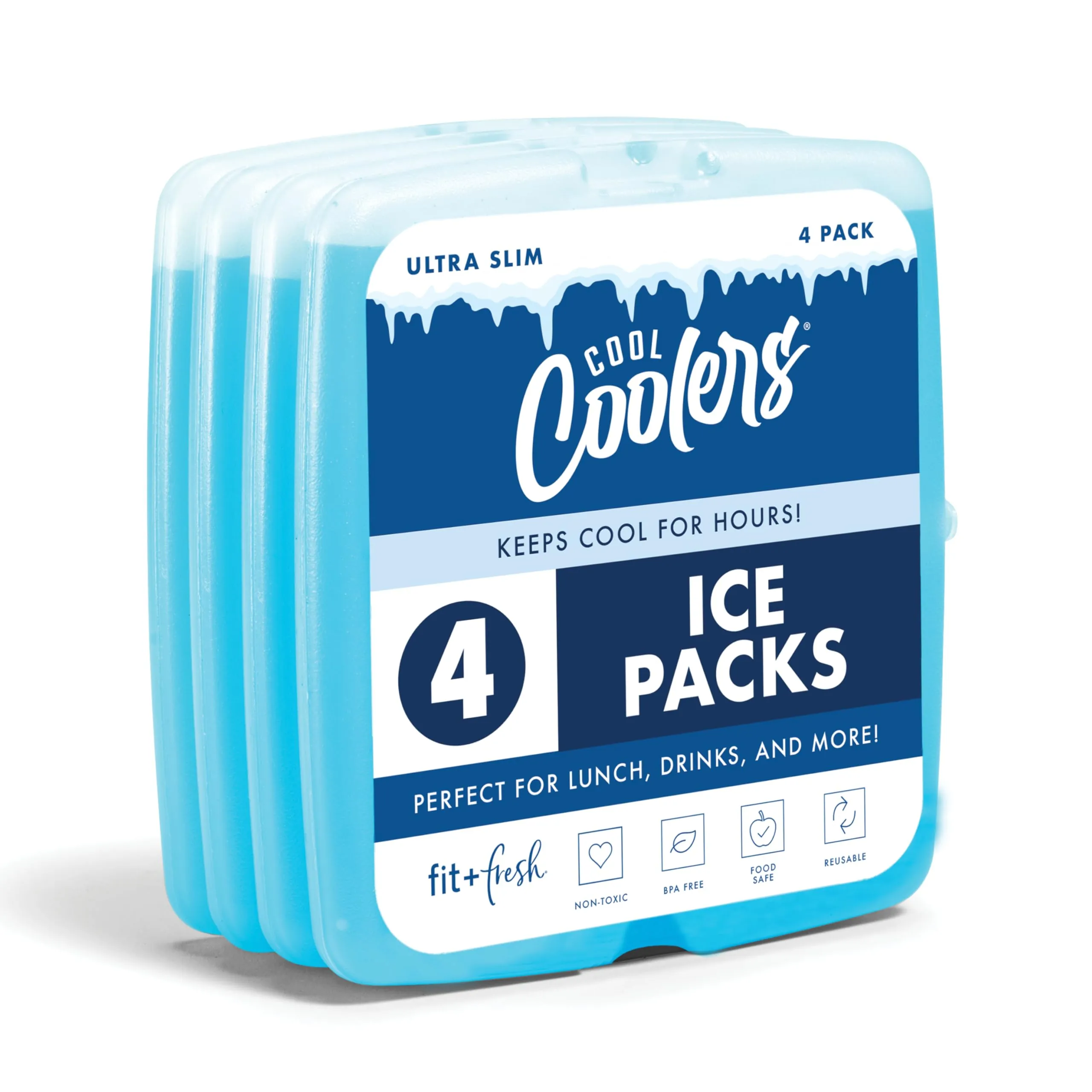
Cool Coolers by Fit + Fresh 4 Pack Slim Ice Packs
- Four-pack format supports rotation and flexible packing.
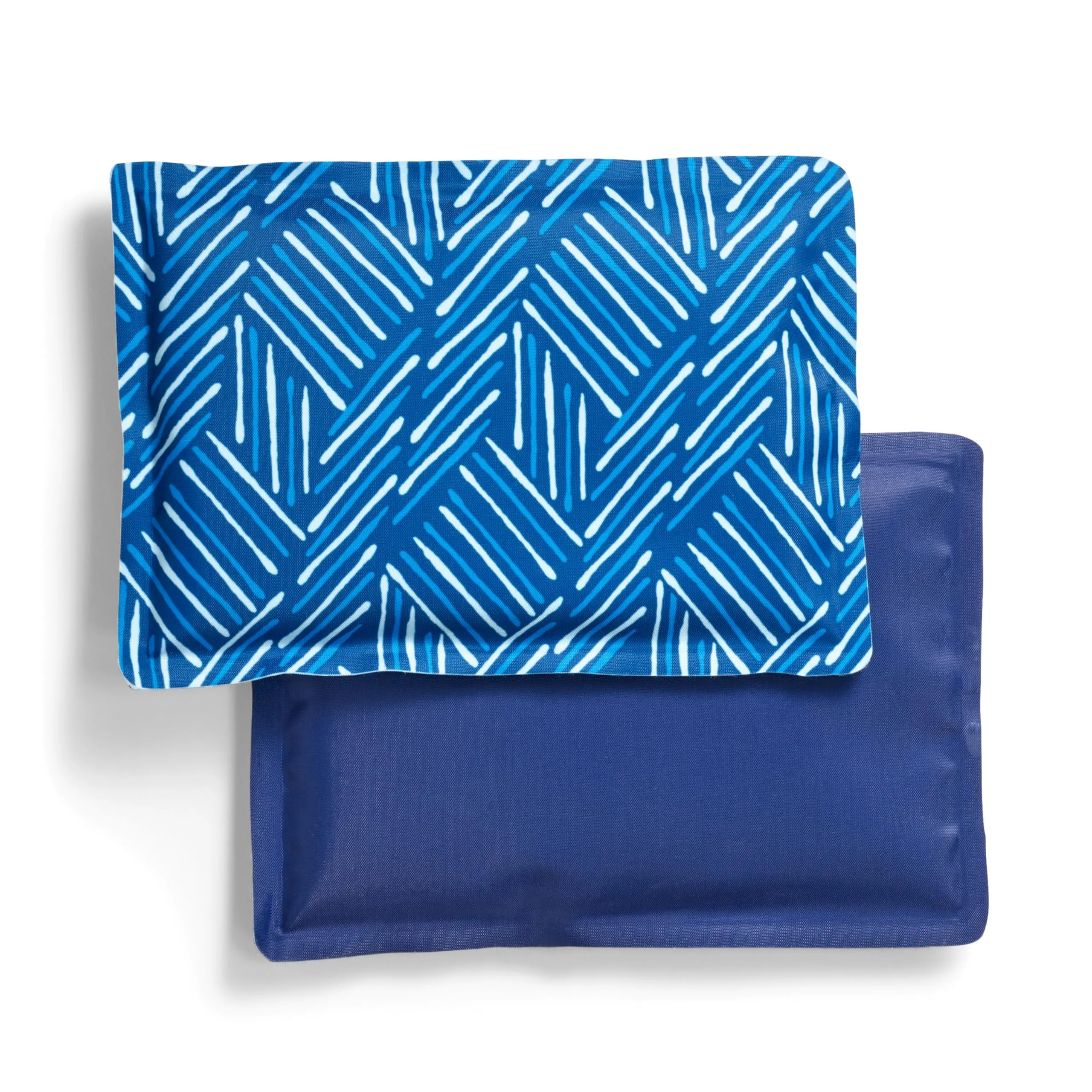
Comparison
The Cool Coolers 4 Pack Slim Ice Packs are stronger for simple everyday lunch and small-cooler packing, with higher effectiveness, value, portability, and customer-satisfaction scores. The Cool Coolers Soft Ice Packs stand out for their flexible nylon format, which can fit around bottles and tightly packed containers. The main trade-off is greater pack quantity and more consistent practical feedback versus flexible positioning.
#1 Overall Winner
Contender
The 4 Pack Slim Ice Packs are better overall for everyday lunch boxes and small coolers. They offer stronger practical scores, more included packs, and more consistent customer feedback. Choose the Soft Ice Packs when fitting cold packs around bottles or in irregular spaces matters more than pack quantity and durability scores.
Overall winner
Depends on your needs
| Feature | Cool Coolers by Fit + Fresh 4 Pack Slim Ice Packs | Cool Coolers by Fit & Fresh 2 Pack Soft Ice Packs | Winner |
|---|---|---|---|
| Overall score | 87 overall | 78 overall | Cool Coolers by Fit + Fresh 4 Pack Slim Ice Packs |
| Best use case | Everyday lunches and small coolers | Flexible packing around bottles and containers | Depends |
| Cooling effectiveness | 88 effectiveness | 76 effectiveness | Cool Coolers by Fit + Fresh 4 Pack Slim Ice Packs |
| Safety | 90 safety | 82 safety; BPA-free and non-toxic claims provided | Cool Coolers by Fit + Fresh 4 Pack Slim Ice Packs |
| Comfort and handling | 92 comfort | 86 comfort | Cool Coolers by Fit + Fresh 4 Pack Slim Ice Packs |
| Ease of use | 96 ease of use | 86 ease of use | Cool Coolers by Fit + Fresh 4 Pack Slim Ice Packs |
| Personalization | 20 personalization | 58 personalization | Cool Coolers by Fit & Fresh 2 Pack Soft Ice Packs |
| Build quality | 84 build quality | 76 build quality | Cool Coolers by Fit + Fresh 4 Pack Slim Ice Packs |
| Durability | 82 durability | 70 durability | Cool Coolers by Fit + Fresh 4 Pack Slim Ice Packs |
| Maintenance | 88 maintenance; hand wash | 78 maintenance; hand wash only | Cool Coolers by Fit + Fresh 4 Pack Slim Ice Packs |
| Portability | 97 portability; four slim packs | 91 portability; two flexible packs | Cool Coolers by Fit + Fresh 4 Pack Slim Ice Packs |
| Value | 93 value; $7.98 for four | 86 value; $6.94 for two | Cool Coolers by Fit + Fresh 4 Pack Slim Ice Packs |
| Customer satisfaction | 95 satisfaction; 4.7/5 from 49,009 reviews | 88 satisfaction; 4.6/5 from 11,433 reviews | Cool Coolers by Fit + Fresh 4 Pack Slim Ice Packs |
| Warranty and support | 40 warranty support | 50 warranty support | Cool Coolers by Fit & Fresh 2 Pack Soft Ice Packs |
Neither product tracks health data or provides a direct health intervention. Their practical health relevance is limited to supporting packed-food routines by helping keep lunches and drinks cool during everyday transport. Item 2 has the higher supplied health-impact score and is described as suitable for milk storage and temperature-sensitive items, but this should not be interpreted as a guarantee of safe storage duration. Item 1 is better supported by its overall practical performance data for routine lunch packing.
Fitness relevance is indirect for both products: each can help carry chilled drinks, snacks, or packed meals for workouts, commuting, or day trips. Item 2 has the higher supplied fitness-support score and its flexible design may fit more easily around bottles in a gym bag. Item 1 has no fitness-support score in the provided data, but its slim four-pack setup can still be practical for packing multiple food or drink compartments. Neither product tracks activity or supports training measurement.
Item 2 has the higher recovery-support score and its supplied description says it can be used as an injury ice pack. That statement reflects product positioning rather than clinical evidence, and it does not establish treatment benefit. Item 1 has no recovery-support score and is primarily presented for lunch boxes and coolers. For food and beverage packing after exercise, both can be useful; for body-use purposes, users should follow product directions and seek appropriate professional guidance where needed.
Both products can support the practical routine of taking food and drinks away from home. Item 2 has the higher supplied wellness-support score, largely aligning with its flexible, multi-bag use case and broader product description. Item 1 has a lower wellness score but stronger performance and convenience scores for daily lunch packing. These are lifestyle accessories rather than products that independently improve wellbeing.
The 4 Pack Slim Ice Packs lead on effectiveness in the supplied data. Reviews repeatedly describe a space-saving profile, quick freezing, and cooling that suits a normal work or school day. Several reviewers note that larger coolers may need more than one pack, which is less of a limitation given the four-pack format.
The Soft Ice Packs have a lower effectiveness score but earn favorable feedback for keeping lunch items and bottles cool while fitting into tight spaces. Their results are less consistent: some buyers report several hours of cooling, while others find the duration too short. For routine flat placement, Item 1 is the stronger option; for conforming around contents, Item 2 has a functional advantage.
Item 2 has the higher recovery-support score and its supplied description says it can be used as an injury ice pack. That statement reflects product positioning rather than clinical evidence, and it does not establish treatment benefit. Item 1 has no recovery-support score and is primarily presented for lunch boxes and coolers. For food and beverage packing after exercise, both can be useful; for body-use purposes, users should follow product directions and seek appropriate professional guidance where needed.
Evidence is limited for both products because the available support consists mainly of specifications, product descriptions, scores, and customer reviews rather than controlled testing. Item 1 has the higher evidence-quality score, supported by a large review base with recurring feedback about slim fit, convenience, and everyday cooling performance. Reviews are useful for practical context but do not verify cooling performance under standardized conditions.
Item 2 has a lower evidence-quality score. Its description provides material and flexibility claims, while customer reports are more mixed on cold duration and durability. Neither set of information establishes a fixed cooling time across bags, environments, or usage patterns.
Item 1 has the higher supplied safety score. It is a reusable plastic ice-pack set with hand-wash care instructions, and the provided reviews include positive reports of no leakage. Item 2 has a lower safety score but includes explicit BPA-free and non-toxic claims in the supplied description, alongside a nylon exterior described as sweat-resistant and leak-resistant.
For both, safety depends on using intact packs as directed, hand washing according to the listed care instructions, and replacing a pack if it becomes damaged or leaks. The supplied information does not provide full testing details or food-storage time guidance.
Item 1 scores higher for comfort and is consistently described as slim, lightweight, and easy to place in a lunch box without displacing food. Its flat rigid shape is simple to handle and stack. Item 2 scores slightly lower, but its flexible form can be more comfortable to position around bottles or uneven items because it is intended to bend rather than remain fixed in one shape.
The practical choice depends on packing style: Item 1 favors stable flat layers, while Item 2 favors adaptable contact around contents.
Item 1 has a clear ease-of-use advantage. The slim packs are designed for direct placement in lunch bags and small coolers, and the four-pack arrangement makes it easier to keep spare packs in the freezer. Reviews also commonly mention quick freezing and uncomplicated daily use.
Item 2 remains easy to use, particularly when its flexible shape helps it fit into an already full bag. However, it includes only two packs and has hand-wash-only care. Both products should be frozen ahead of use and cleaned according to their supplied care directions.
Item 1 has the stronger build-quality score. Its plastic construction is described by several reviewers as sturdy, with positive comments about repeated freezing and no leakage. The available feedback is comparatively consistent for an everyday lunch accessory.
Item 2 uses extra-thick nylon according to its product description and receives some positive comments about its material and seams. However, the review overview also notes mixed durability feedback, including reports that some packs tear easily. Based on the available data, Item 1 appears to be the more consistently robust option.
Item 1 leads on durability. Its higher score is consistent with reviews describing repeated freezing, regular use, and no leaks or breaks. This does not guarantee identical longevity for every pack, but the available feedback is favorable.
Item 2 also has buyers who report months of reliable use and easy cleaning. Still, reports of tearing, uneven gel distribution, and inconsistent flexibility reduce confidence in long-term consistency. Users who prioritize a tougher everyday format should favor Item 1, while those who need flexible placement may accept Item 2's trade-off.
Both products need basic freezer storage and hand washing. Item 1 has the higher maintenance score and its rigid plastic surface may be simpler to wipe and manage between uses. Item 2 is also described as easy to rinse and pat dry, but its nylon fabric and hand-wash-only instruction add slightly more care consideration. Neither product requires charging, calibration, or replacement parts in the provided data.
Both products are compact, but Item 1 has the higher portability score. Its 0.5-inch slim packs are designed to take little room in lunch boxes and small coolers. Item 2 is also thin and can fit around contents, which may be more convenient in tightly packed bags. Choose based on rigid flat packing versus flexible placement.
Item 2 has the higher personalization score because its flexible design can be positioned around different container shapes, bottles, snacks, and beverages. The product description also suggests stacking multiple packs where greater cooling is needed. This creates more packing flexibility than a rigid format.
Item 1 has limited personalization beyond choosing how many of its four slim packs to use and where to place them. That simplicity is useful for standard lunch boxes, but Item 2 is better for users whose bag layout changes frequently.
The 4 Pack Slim Ice Packs offer the stronger value proposition in the available data. They have the higher value score, cost $7.98, include four packs, and receive very strong satisfaction feedback from a large review base. Their practical limitation is that extended cooling may require using more than one pack, but the included quantity helps address that.
The Soft Ice Packs cost $6.94 for two packs and have a lower value score. Their value depends more on whether the flexible nylon format is genuinely useful for the buyer's containers. For general lunch-box use, Item 1 provides more utility per set; for flexible placement, Item 2 may justify its format.
Both products come from Fit & Fresh, so this is primarily a comparison of product consistency rather than competing brands. Item 1 has the higher brand-trust score, supported by stronger overall scores, a larger review base, and more consistent customer feedback. Item 2 has a lower score but remains supported by a substantial number of reviews and a clear product description.
The available data does not provide detailed information about company support practices, transparency processes, or warranty administration.
Item 1 has the stronger customer-satisfaction profile: 4.7 out of 5 stars from 49,009 reviews and a higher satisfaction score. Repeated praise focuses on the thin shape, fit in lunch boxes, four-pack convenience, and everyday cooling. The recurring criticism is that the smaller packs may not stay cold as long as larger alternatives.
Item 2 also has strong feedback, with 4.6 out of 5 stars from 11,433 reviews. Buyers often praise its flexibility, compact form, and ability to fit around bottles. However, cooling duration, tear resistance, and flexibility after freezing receive more mixed comments.
Item 2 has the slightly higher warranty-support score, but neither product listing provides specific warranty, return, or customer-support terms. As a result, the difference should not be treated as evidence of a defined support advantage. Buyers should check the retailer and manufacturer terms available at the time of purchase, especially if long-term coverage is important.
The Cool Coolers 4 Pack Slim Ice Packs are the better overall purchase. They combine higher effectiveness, convenience, durability, portability, value, and customer-satisfaction scores with a practical four-pack format. The Cool Coolers Soft Ice Packs are a credible alternative for flexible packing around bottles and containers, but their mixed cooling-duration and durability feedback makes them less broadly reliable for everyday use.
Overall winner
Depends on your needs
Based on the available scores and review data, the 4 Pack Slim Ice Packs are the stronger overall choice for everyday lunch and small-cooler use. They score higher for effectiveness, ease of use, portability, value, and customer satisfaction. The Soft Ice Packs are the better fit when a flexible shape is more important than having four rigid packs.
Both are designed for lunch boxes, but the 4 Pack Slim Ice Packs have the clearer advantage for routine lunch packing. Their flat, slim format and four-pack quantity make placement and rotation straightforward. Choose the Soft Ice Packs if the lunch bag is tightly packed around bottles or containers and flexibility is the main priority.
The 2 Pack Soft Ice Packs are better suited to bottles and irregularly shaped contents because the product description says they remain flexible after freezing and can provide direct insulation around items. Review feedback generally supports this use, although reports on frozen flexibility are mixed.
Customer feedback for both products suggests they can keep contents cold for several hours in typical lunch use, but duration varies with the bag, surrounding temperature, pack quantity, and how often the bag is opened. Some reviewers of both products wanted longer cooling performance, so neither should be assumed to provide extended cooling in every situation.
The 4 Pack Slim Ice Packs have the stronger value score and provide four packs at the listed price, compared with two Soft Ice Packs. That supports better practical value for users who need several packs in rotation. The Soft Ice Packs may still be worthwhile when their flexible nylon design solves a specific packing need.
The 4 Pack Slim Ice Packs have the higher durability and build-quality scores, and several reviews describe repeated use without leaks or breakage. The Soft Ice Packs also receive positive durability comments, but customer feedback is less consistent, with some reports of tears, reduced flexibility, or uneven filling.
The available description for the Soft Ice Packs identifies them as BPA-free and non-toxic, and it describes a sweat-resistant nylon exterior. The Slim Ice Packs have a higher supplied safety score, but the provided data does not include equivalent BPA-free or non-toxic material claims. In either case, follow the stated care instructions and replace a damaged pack.
The 4 Pack Slim Ice Packs are the simpler beginner choice. Their rigid, flat format is easy to position in a lunch box, and the four-pack reduces the risk of having no frozen pack available. The Soft Ice Packs are also straightforward to use, but their advantage is more specific to users who need flexible positioning.
Check our rankings and expert guides to find the best health products for your goals.