#1 Overall Winner
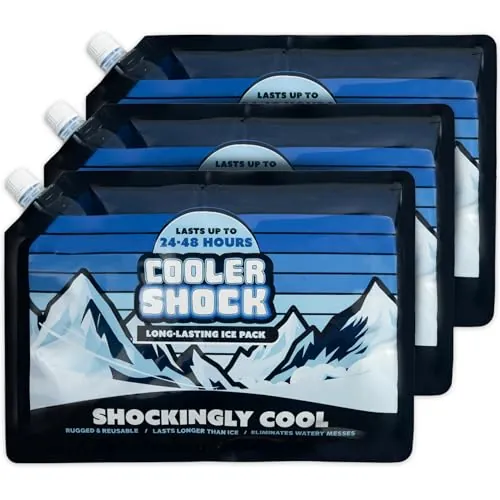
Cooler Shock Reusable Ice Packs for Cooler
- Designed for cooler and lunch-box cooling
Comparison
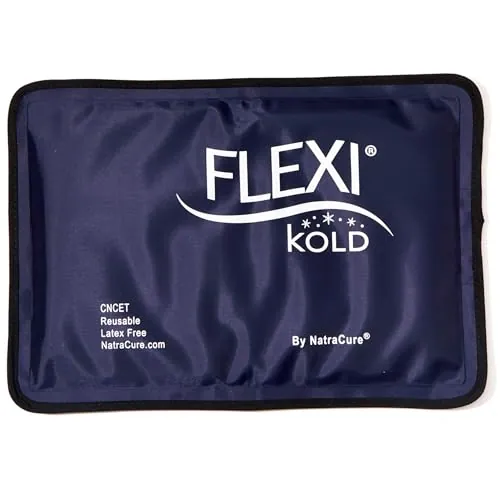
Cooler Shock is strongest as a reusable cooler pack for camping, lunch boxes, road trips, and other food-and-drink storage needs. FlexiKold is stronger for flexible cold-compress and recovery-oriented use, with better comfort, durability, and ease-of-use scores. The main trade-off is cooler portability and value versus body-conforming flexibility and recovery relevance.
#1 Overall Winner
Contender
FlexiKold is better overall for flexible cold-compress and recovery-oriented use. Cooler Shock is better for camping coolers, lunch boxes, and travel food storage. Choose based on whether you need body-conforming cold or long-lasting cooler organization.
Overall winner
Depends on your needs
| Feature | Cooler Shock Reusable Ice Packs for Cooler | FlexiKold Gel Soft Flexible Ice Packs | Winner |
|---|---|---|---|
| Overall score | 82 overall | 82 overall | Tie |
| Primary use | Cooler, lunch box, camping, travel | Flexible body cold compress | Depends |
| Health impact | 42 | 72 | FlexiKold Gel Soft Flexible Ice Packs |
| Fitness support | 58 | 58 | Tie |
| Recovery support | 0 | 90 | FlexiKold Gel Soft Flexible Ice Packs |
| Comfort | 72 | 85 | FlexiKold Gel Soft Flexible Ice Packs |
| Ease of use | 83 | 91 | FlexiKold Gel Soft Flexible Ice Packs |
| Build quality | 66 | 84 | FlexiKold Gel Soft Flexible Ice Packs |
| Durability | 55 | 83 | FlexiKold Gel Soft Flexible Ice Packs |
| Maintenance | 88 | 88 | Tie |
| Portability | 84 | 67 | Cooler Shock Reusable Ice Packs for Cooler |
| Value | 85; $22.39 | 81; $13.99 | Cooler Shock Reusable Ice Packs for Cooler |
| Customer satisfaction | 89; 4.6/5 from 29,034 reviews | 94; 4.7/5 from 67,180 reviews | FlexiKold Gel Soft Flexible Ice Packs |
| Warranty and support | 38 | 52 | FlexiKold Gel Soft Flexible Ice Packs |
FlexiKold has the stronger general health-relevance score because it is designed for cold-compress use on body areas and is commonly used in recovery routines. Cooler Shock's health relevance is more indirect: its core purpose is keeping cooler contents cold during travel or outdoor activity. Neither pack monitors health or diagnoses any condition, and product reviews should not be interpreted as clinical evidence.
The products are tied on fitness support, but they contribute differently. Cooler Shock can be useful for keeping drinks and packed food cold around hikes, camping, or travel. FlexiKold is more relevant after activity because its flexible format is designed for cold-compress routines. Neither is a workout tracker or training device, so the shared score should be understood as practical support around activity rather than performance measurement.
FlexiKold is the clear recovery-focused choice. Its high recovery score, pliable frozen gel, and body-conforming format make it more suitable for applying a cold compress after activity or as part of a personal recovery routine. Cooler Shock has no recovery-support score because it is engineered for cooler storage rather than body contact. Cold-compress use should be approached sensibly, including following product instructions and using a barrier where appropriate.
FlexiKold has higher wellness relevance because it can fit into a simple at-home cold-compress or post-activity routine. Cooler Shock's wellness role is practical rather than therapeutic: it supports prepared food and drink storage during active days, travel, and outdoor time. Neither product offers guided routines, monitoring, or personalized wellness insights, so convenience and intended use should drive the choice.
Both products have the same high effectiveness score, but effectiveness should be judged against their separate intended purposes. Cooler Shock is designed to keep cooler contents cold, with a stated 18°F phase-change point and reviews that frequently praise all-day or multi-day cooling when paired with a suitable cooler. FlexiKold is designed as a flexible cold compress, and reviews consistently highlight pliability, coverage, and sustained cold after freezing. Cooler Shock is more effective for cooler packing; FlexiKold is more effective when body-conforming application is the priority.
FlexiKold is the clear recovery-focused choice. Its high recovery score, pliable frozen gel, and body-conforming format make it more suitable for applying a cold compress after activity or as part of a personal recovery routine. Cooler Shock has no recovery-support score because it is engineered for cooler storage rather than body contact. Cold-compress use should be approached sensibly, including following product instructions and using a barrier where appropriate.
FlexiKold has the higher evidence-quality score, reflecting a clearer fit with general cold-compress use. However, the supplied data does not provide clinical studies for either specific product. FlexiKold's product claims and customer comments about comfort or perceived relief are not equivalent to clinical proof. Cooler Shock has moderate evidence quality centered on its functional cooling design and buyer feedback, but real-world duration depends on freezer temperature, pack size, cooler insulation, loading, and outside conditions.
FlexiKold has the higher safety score and is specified with a thick nylon exterior and double-sealed seams. Reviews also mention using a towel or other fabric barrier for cold-compress application, which is a sensible practical consideration for a very cold pack. Cooler Shock's safety score is lower in part because reviews report occasional cracks or leaks, and one review cautions that deeply frozen packs can be extremely cold to handle. Follow the supplied instructions, inspect either pack for damage, and avoid using a leaking pack.
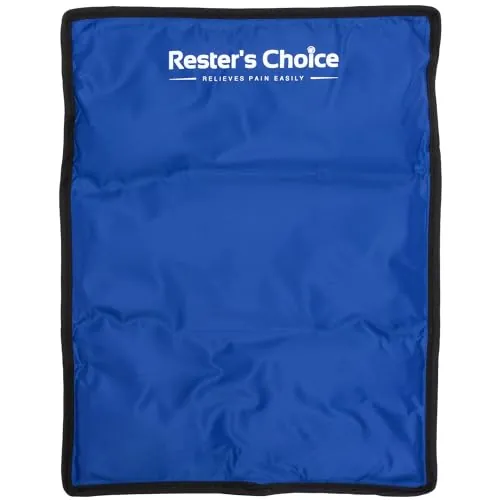
FlexiKold leads on comfort because its gel remains pliable in the freezer and can bend around body contours. Reviewers particularly value this characteristic for areas such as knees, shoulders, hips, and the back. Cooler Shock has a respectable comfort score for its intended role, where a thin, flat shape is convenient inside a cooler. It is not designed to wrap around the body, so it is less suitable where close, flexible contact matters.
FlexiKold has the simpler use path: freeze the pack and use it when needed. Its strong ease-of-use score is supported by reviews describing straightforward repeated freezing and application. Cooler Shock also performs well once prepared, but it requires a one-time setup process involving measured water, mixing, sealing, and a full freeze. Users must also account for its dimensions when choosing a cooler and when allocating freezer space.
FlexiKold has a clear build-quality advantage. The supplied specifications describe double-sealed seams and an extra-thick nylon exterior, and reviewers frequently describe the material as sturdy and durable. Cooler Shock is nylon-reinforced and many buyers report reliable performance, but its lower build-quality score aligns with reviews mentioning vulnerable corners, seam-area failures, and eventual leaks. For repeated body-contact or frequent-use cold-compress routines, FlexiKold has the stronger construction signal.
FlexiKold is the more convincing long-term option based on the supplied durability score and review pattern. Buyers commonly praise the nylon construction and report no leaks or damage, though individual experiences can vary. Cooler Shock is reusable and some owners report extended use, but durability is the central trade-off: several reviews mention leaking, weak corners, cracks, or packs failing after repeated camping seasons. Inspect Cooler Shock packs before use, particularly after long storage or heavy use.
Maintenance is a tie. Both products are reusable and need freezer storage between uses. Cooler Shock requires more effort only at the start, when it must be filled and sealed correctly; thereafter it can be refrozen. FlexiKold avoids filling and is simply refrozen after use. Neither product has supplied information about replaceable components or advanced upkeep.
Cooler Shock is more portable for its intended outdoor role. Its thin shape is designed to fit among cooler contents, and it has a substantially higher portability score. FlexiKold is still transportable, but its 1.5-pound listed weight and body-coverage design make it less convenient for compact cooler packing or travel storage.
Personalization is limited for both products because neither offers adjustable temperature controls, apps, or user profiles. FlexiKold scores slightly higher because its flexible gel can be folded or positioned to fit different body areas, and the product line is referenced in multiple sizes within reviews. Cooler Shock offers a flat format and size options, but its fit depends more on matching the pack to the internal dimensions of a cooler. Select either product according to the specific size and use case required.
Cooler Shock has the higher value score despite its higher listed price. That reflects its specialized ability to replace loose ice in a cooler and its strong feedback on reusable, mess-reducing cooling. For users who frequently buy ice for outdoor trips, that role may be valuable, although performance and lifespan vary by use. FlexiKold costs less in the supplied listing and has stronger durability and satisfaction signals, which can make it the more practical purchase for flexible cold-compress use. The better value depends on the job, not price alone.
FlexiKold has the higher brand-trust score, supported by a very large review base and consistently positive comments about material quality, flexibility, and practical performance. Cooler Shock also has substantial customer feedback and a strong rating, with buyers often praising its cooler performance and reusable format. The main factor limiting confidence in Cooler Shock is the recurring durability feedback. Detailed brand transparency, support processes, and warranty terms are not supplied for either product.
Both products are highly rated, but FlexiKold leads slightly in customer satisfaction with a 4.7/5 average from 67,180 reviews, compared with Cooler Shock's 4.6/5 average from 29,034 reviews. FlexiKold praise repeatedly centers on frozen flexibility, coverage, cold retention, and durable-feeling construction. Cooler Shock customers often praise effective cooling, slim storage, ease of filling, and reduced dependence on loose ice. The most consistent negative signal for Cooler Shock is leakage or corner fragility; for FlexiKold, a few users report limited gel volume or shorter-than-expected cold duration.
FlexiKold has the higher warranty-and-support score, but the supplied information does not include specific warranty duration, return terms, or support policies for either item. Cooler Shock's lower score should be considered alongside review reports of leakage and replacement concerns. Verify current seller and manufacturer terms before purchasing, especially if long-term durability is a key requirement.
Cooler Shock and FlexiKold are tied on overall score but are not interchangeable. Cooler Shock is the more portable, higher-value cooler accessory for outdoor food and drink storage. FlexiKold is the stronger flexible cold-compress product, with better scores for recovery support, comfort, safety, construction, durability, ease of use, and customer satisfaction. For most body-oriented cold-pack needs, choose FlexiKold; for cooler organization and reusable outdoor cooling, choose Cooler Shock.
Overall winner
Depends on your needs
They are strongest for different jobs. FlexiKold is the better choice for flexible cold-compress and recovery-oriented use, with higher scores for recovery, comfort, build quality, and durability. Cooler Shock is the better fit for keeping contents cold in a cooler, with higher portability and value scores.
Cooler Shock is the clear match for cooler use. Its flat, large format is specifically described for coolers, lunch boxes, camping, fishing, and road trips. FlexiKold is a body-oriented gel cold pack, so its flexible design is not the primary advantage when organizing food and drinks in a cooler.
FlexiKold is better suited to recovery routines based on the supplied data. It has a much higher recovery-support score and is designed to stay flexible after freezing, helping it conform around areas such as a knee, shoulder, back, or leg. This is practical cold-compress support, not a substitute for medical advice.
FlexiKold has the advantage for comfort. Its comfort score is higher, and reviews repeatedly mention its pliable gel and ability to bend or wrap around body contours. Cooler Shock is built for cooler storage, where its thin rectangular form is useful, but it is not intended to provide the same body-conforming experience.
FlexiKold is easier to use day to day because it can be frozen and applied without assembly. Cooler Shock still scores well for usability, but its initial process requires measuring and adding water, mixing, removing excess air, sealing, and fully freezing the pack before use.
Both products have strong review performance, but FlexiKold leads slightly in customer satisfaction and has a larger review base, with a 4.7/5 rating from 67,180 reviews. Cooler Shock has a 4.6/5 rating from 29,034 reviews and is frequently praised for cooling performance and reusable value.
FlexiKold has the stronger durability signal in the supplied scores and reviews. Its thick nylon exterior and double-sealed seams are specified, while reviewers often describe it as sturdy. Cooler Shock is nylon-reinforced, but multiple reviews mention corner cracking, leaks, or a limited service life after repeated use.
No. FlexiKold has the higher evidence-quality score for its cold-compress use, while Cooler Shock has a moderate evidence-quality score centered on cooler performance. Neither product provides tracking or clinical evidence in the supplied data. Customer reviews describe personal experiences and should not be treated as clinical proof.
Check our rankings and expert guides to find the best health products for your goals.