#1 Overall Winner
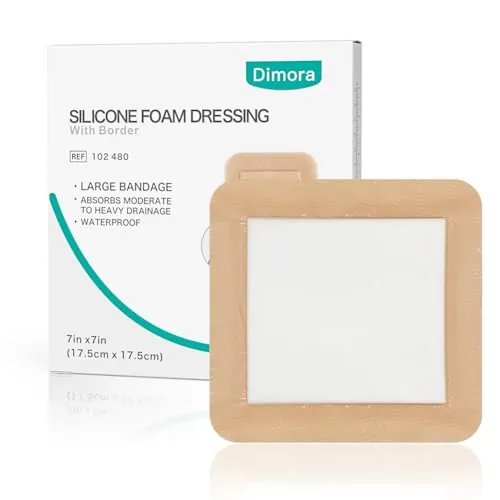
Dimora Large Bandage Ultra Soft Wound Dressing
- Large 7 x 7 inch dressing with a 5 x 5 inch absorbent pad
Comparison
Dimora is stronger for large-area wound coverage where cushioning, absorbency, and gentle silicone adhesion are priorities. Nexcare is better for everyday minor cuts, scrapes, and blisters that need a compact waterproof bandage. The core trade-off is specialized large-wound foam coverage versus lower-cost, portable waterproof first aid.
#1 Overall Winner
Contender
Dimora is better overall for its intended large-wound dressing role, particularly when comfort, cushioning, and absorbency are priorities. Nexcare is better for most households needing many waterproof bandages for minor cuts and blisters. Choose based on the wound type and required coverage, not simply the overall score.
Overall winner
Depends on your needs
| Feature | Dimora Large Bandage Ultra Soft Wound Dressing | Nexcare Waterproof Clear Bandages | Winner |
|---|---|---|---|
| Overall score | 89 overall score | 87 overall score | Dimora Large Bandage Ultra Soft Wound Dressing |
| Primary use | Large, moderate-to-heavy exudate wound coverage | Minor cuts, scrapes, and blisters | Depends |
| Health impact | Higher health-impact score | Lower health-impact score | Dimora Large Bandage Ultra Soft Wound Dressing |
| Fitness support | No meaningful fitness role | Limited relevance for minor activity-related cuts or blisters | Nexcare Waterproof Clear Bandages |
| Recovery support | Higher recovery-support score | Lower recovery-support score | Dimora Large Bandage Ultra Soft Wound Dressing |
| Waterproof use | Waterproof packaging and product claims | 360-degree waterproof seal for minor wounds | Nexcare Waterproof Clear Bandages |
| Comfort | Higher comfort score; soft foam and silicone adhesive | Lower comfort score; thin flexible backing | Dimora Large Bandage Ultra Soft Wound Dressing |
| Ease of use | Higher ease-of-use score | Lower ease-of-use score | Dimora Large Bandage Ultra Soft Wound Dressing |
| Portability | Large five-pack dressing format | Compact 100-count assorted pack | Nexcare Waterproof Clear Bandages |
| Value | Five large specialized dressings for $20.90 | 100 assorted minor-wound bandages for $6.85 | Nexcare Waterproof Clear Bandages |
| Brand trust | Moderate brand-trust score | Higher brand-trust score; made by 3M | Nexcare Waterproof Clear Bandages |
| Customer satisfaction | Higher customer-satisfaction score; 4.6/5 from 18,404 reviews | Very high satisfaction score; 4.6/5 from 20,877 reviews | Dimora Large Bandage Ultra Soft Wound Dressing |
| Maintenance | Individually wrapped disposable dressings | Disposable bandages with higher maintenance score | Nexcare Waterproof Clear Bandages |
| Warranty and support | Limited supplied information | Limited supplied information | Tie |
Dimora has the higher health-impact score because it is designed for larger wound areas, cushioning, and absorbent wound coverage. Its product information also emphasizes use on sensitive or fragile skin. Nexcare has a more limited health-impact role, focused on protecting minor cuts, scrapes, and blisters from water, dirt, and everyday contact. Neither product diagnoses or treats health conditions. Their practical value is in appropriate wound coverage and protection, with the suitable option determined by the size and nature of the wound.
Nexcare has limited but clearer fitness relevance because it is intended to stay on during exercise and wet activities, and its flexible construction can suit fingers, knees, and other hard-to-cover areas. This is about protecting minor wounds while remaining active, not measuring or improving fitness. Dimora has no meaningful fitness-support role in the supplied scoring, although its cushioned dressing may be relevant to appropriate wound-care needs. Neither product tracks workouts, activity, or performance.
Dimora has the stronger recovery-support score. Its large foam pad, cushioning, and absorbency are designed for wound-care contexts where protecting the covered area and managing exudate are priorities. Customer feedback often praises its comfort and protective feel, but reviews should not be considered clinical evidence of outcomes. Nexcare provides useful protection for minor wounds, especially when water exposure is likely, but its small nonstick pad and thin format are not intended to replace a large absorbent foam dressing.
Dimora has higher wellness relevance in the supplied data because comfortable, protective wound coverage can support daily comfort in its intended use case. Nexcare supports practical everyday wellbeing through convenient minor-wound protection during chores, outdoor activity, and travel. These are functional first-aid products rather than broader wellness devices. Their usefulness depends on having the right dressing available for the type of wound and following appropriate care guidance.
Both products score strongly for effectiveness, with Nexcare holding a small lead. That result reflects different strengths: Nexcare is designed to create a waterproof seal around minor wounds, and customer reviews frequently praise its performance in showers and repeated hand washing. Dimora is built around a large absorbent foam pad, soft cushioning, and coverage for larger or more exuding wounds. It also receives positive feedback for comfort and absorption. Nexcare is more effective for its narrow everyday waterproof-bandage task, while Dimora is more effective when large-area foam coverage and absorbency are needed.
Dimora has the stronger recovery-support score. Its large foam pad, cushioning, and absorbency are designed for wound-care contexts where protecting the covered area and managing exudate are priorities. Customer feedback often praises its comfort and protective feel, but reviews should not be considered clinical evidence of outcomes. Nexcare provides useful protection for minor wounds, especially when water exposure is likely, but its small nonstick pad and thin format are not intended to replace a large absorbent foam dressing.
Nexcare has the higher evidence-quality score, although the supplied information is still mainly product specifications, marketing descriptions, and customer reviews. Its stated waterproof construction, clear backing, and latex-free status are product features, not clinical-outcome evidence. Dimora has a moderate evidence-quality score; its absorbency, cushioning, and wound-environment claims come from product information, with customer reviews offering practical but anecdotal feedback. Neither set of supplied material establishes clinical superiority or guarantees a particular wound outcome. Product functionality and individual reviews should be distinguished from independent clinical evidence.
Dimora has the higher safety score and is described as using a gentle silicone adhesive suitable for sensitive and fragile skin. However, review feedback is not uniform: one review cautioned that adhesive contact may affect skin around a scar or injury. Nexcare's score is lower, and some reviewers describe irritation or difficult removal when its strong adhesive is worn for a long time. Both are adhesive wound products, so skin response, dressing condition, and the appropriateness of the product for the wound matter. The supplied data does not provide detailed clinical safety guidance.
Dimora has a clear comfort advantage. Its high comfort score aligns with its 2 mm ultra-soft foam, cushioning design, and silicone adhesive intended to reduce trauma during dressing changes. Review feedback frequently mentions gentle removal and comfort on sensitive skin. Nexcare's ultra-thin flexible backing can be comfortable and discreet for minor wounds, but its comfort score is lower. Some users praise its smooth seal, while others report that the adhesive can irritate skin or feel difficult to remove.
Dimora scores higher for ease of use, with individual waterproof packaging and an adhesive bordered design intended for direct application. Its larger size may also make sense when broad coverage is needed. Nexcare is convenient to store and use for minor cuts, but its lower ease-of-use score reflects mixed review feedback. Several buyers find the thin film easy to apply, while others say it can take practice, particularly around fingertips or creased areas. For routine first aid, Nexcare is simple in concept; for application consistency, Dimora scores better.
Build-quality scores are close, with Dimora slightly ahead. Dimora's construction includes a five-layer absorbent pad, soft foam, and silicone adhesive border, all directed toward cushioning and absorbency. Nexcare uses a clear flexible backing, nonstick pad, and waterproof sealing design, with reviews frequently praising its thin but durable feel. Both products receive positive quality feedback, but their construction serves different goals: Dimora emphasizes padded large-area coverage, while Nexcare emphasizes a close-fitting waterproof seal for minor wounds.
Nexcare has the higher durability score. Customer reviews often report that the thin waterproof bandages remain in place through showers, hand washing, and other wet conditions, though adhesion results are mixed. Dimora also scores well and is described as resisting curling or peeling, with some reviewers reporting that it stays secure for extended wear. Its feedback is likewise mixed on adhesion. In practice, durability depends on placement, moisture exposure, skin movement, and the condition of the adhesive edges.
Both are disposable products with minimal upkeep. Nexcare has a slight maintenance-score advantage because its compact assorted box is straightforward to keep in a first-aid kit and replace as needed. Dimora is also easy to store because the dressings are individually waterproof packaged. Neither product requires charging, calibration, cleaning, or software updates. Appropriate replacement timing depends on the product instructions and wound-care context.
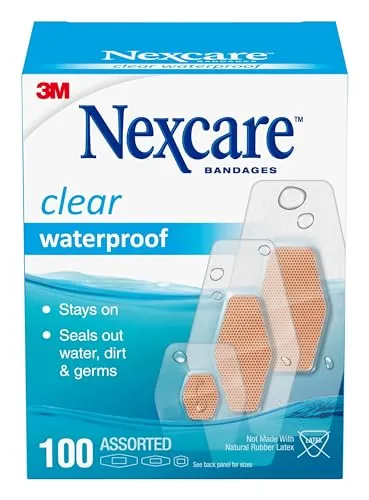
Nexcare is the more portable option, with a very high portability score, low weight, and compact 100-count box. Its assorted small sizes suit travel bags, work kits, and everyday first aid. Dimora remains portable as individually wrapped dressings, but its 7 x 7 inch size and bulkier foam construction make it less convenient for compact carry.
Dimora has the higher personalization score because its larger foam format is intended for larger coverage needs, and the broader product line mentioned in reviews includes multiple sizes. The bordered format in this comparison is a fixed 7 x 7 inch size, however, so it is not highly customizable. Nexcare's main personalization benefit is its assortment of three small bandage sizes for different minor-wound locations. Its lower score reflects fewer adjustment options beyond selecting the appropriate size from the pack.
Nexcare has the higher value score. At $6.85 for 100 assorted bandages, it offers broad coverage for routine minor cuts, scrapes, and blisters, while also providing waterproof performance. Some buyers still dislike the assortment balance or consider the pack expensive, so value will vary with the sizes used most often. Dimora costs $20.90 for five large foam dressings and is not designed to compete as a high-volume everyday bandage. Its value lies in its large size, cushioning, and absorbent construction for its specific use case. Choose value based on the coverage needed, not item count alone.
Nexcare has the stronger brand-trust score in the supplied data and is manufactured by 3M Corp. Its long availability and large review base add useful consumer context, although reviews do not independently verify every product claim. Dimora has a moderate brand-trust score and is manufactured by Winner Medical. It also has a substantial review count and favorable satisfaction score, but the provided information offers less support around brand reputation and warranty terms. Brand trust favors Nexcare, while product fit remains the more important selection factor.
Both products receive very favorable customer feedback, with 4.6/5 ratings and more than 18,000 reviews each. Dimora has a marginally higher customer-satisfaction score. Reviewers commonly praise its soft cushioning, large coverage, absorption, and comfort during removal; recurring limitations are mixed adhesion and value opinions. Nexcare receives repeated praise for real-world waterproof performance, flexibility, and staying power. Its complaints focus on inconsistent adhesion, difficult application for some users, too many small sizes, and possible irritation. These reviews describe buyer experiences rather than clinical proof of effectiveness.
There is no meaningful advantage in the supplied warranty-support data: both products have the same score, and detailed warranty or returns terms were not provided. One Dimora review reports positive seller follow-up, but that is an individual experience rather than a general support policy. Buyers should confirm current return, replacement, and seller terms at the point of purchase.
Dimora Large Bandage Ultra Soft Wound Dressing is the higher-scoring and more capable option for its specialized role: large-area, cushioned, absorbent wound coverage with an emphasis on comfort. Nexcare Waterproof Clear Bandages are the better everyday purchase for minor wounds, wet conditions, travel, and first-aid-kit value. The best product is therefore determined by the dressing task: choose Dimora for large foam-dressing needs and Nexcare for routine waterproof bandage coverage.
Overall winner
Depends on your needs
They serve different needs. Dimora is the stronger overall option for large-area, absorbent foam-dressing use, with higher comfort and recovery-support scores. Nexcare is better suited to routine minor cuts, scrapes, and blisters, particularly when waterproof coverage, portability, and a 100-count assorted pack matter most.
Dimora is the more relevant product based on the supplied specifications. Its large 7 x 7 inch format, 5 x 5 inch absorbent pad, and foam construction are intended for large wounds and moderate to heavy exudate. Nexcare is described for minor wounds and does not offer comparable size or absorbency.
Nexcare is the clearer choice for minor wounds during wet activities. Its thin clear backing and 360-degree seal are specifically designed to keep water out during showers, baths, pools, cleaning, and similar situations. Dimora is described as waterproof, but its main advantage is large, cushioned, absorbent coverage rather than compact everyday water exposure.
Dimora has the higher comfort score and is positioned around ultra-soft foam cushioning and a silicone adhesive layer. Reviews commonly praise comfortable application and removal, although adhesion feedback is mixed. Nexcare can conform closely to the skin, but some reviews report irritation or difficult removal from its strong adhesive.
Nexcare has the higher value score and costs less upfront while including 100 assorted bandages. That makes it more economical for frequent minor first-aid needs. Dimora costs more per pack and includes five dressings, but its larger foam format and absorbency address a different, more specialized use case.
Nexcare has more direct relevance for activity because it is designed for minor cuts and blisters during exercise and wet conditions. Dimora is not a fitness product, though its cushioned, protective format may be relevant for appropriate wound-care situations. Neither product provides fitness tracking or performance data.
Both products have very strong customer satisfaction scores and a 4.6/5 rating. Dimora has a slightly higher customer-satisfaction score, with frequent praise for comfort, cushioning, and absorption. Nexcare has more reviews and recurring praise for waterproof performance, while both products receive mixed feedback about adhesion.
The available information includes product specifications, score data, and customer feedback, rather than a detailed body of independent clinical evidence. Nexcare has a somewhat higher evidence-quality score, while Dimora's score is moderate. Product claims and reviews should not be treated as proof of clinical outcomes; follow relevant care guidance for wound concerns.
}],Nexcare is generally the simpler beginner option for routine first aid because it is a compact 100-count assortment for minor cuts, scrapes, and blisters. Dimora is easy to apply according to its score and reviews, but its larger foam-dressing format is more specialized and requires choosing a dressing size suited to the wound area.
Check our rankings and expert guides to find the best health products for your goals.