Is the Garmin Forerunner 265 good for running training?
Yes. Based on the product details and scores, the Forerunner 265 is especially strong for running training. It combines multi-band GPS, wrist-based running power, personalized suggested workouts, and training readiness tools. Its fitness support score of 96 and effectiveness score of 93 suggest it is better suited to structured training than many general-purpose smartwatches.
Is the Garmin Forerunner 265 useful for sleep and recovery tracking?
It appears useful for monitoring sleep and recovery trends rather than providing clinical sleep analysis. The watch includes sleep overview, HRV status, morning reports, recovery insights, and training readiness. With a sleep support score of 82 and recovery support score of 92, it looks particularly strong for athletes who want recovery context alongside training data.
How accurate is the Garmin Forerunner 265 for GPS tracking?
The available data points to strong GPS performance. Garmin includes multi-band GNSS with SatIQ, and customer reviews repeatedly praise route accuracy and stability. The tracking accuracy score is 90, which supports the view that it performs well for outdoor training. That said, the brand notes some tracked metrics are still close estimations rather than exact measurements.
Does the Garmin Forerunner 265 require an app?
Some of its more advanced training and planning features depend on the Garmin Connect app. For example, race strategy and personalized suggested workouts are linked to information entered into the app. The watch can still function as a smartwatch and fitness tracker on its own, but users will get more value if they are willing to use the companion app.
Is the Garmin Forerunner 265 easy for beginners to use?
It is usable for beginners, but not the simplest option in the category. The ease of use score is 74, and review feedback suggests a learning curve around menus and advanced features. People who want deep metrics may find that worthwhile, while buyers looking for a very simple tracker may prefer something more basic.
Is the Garmin Forerunner 265 comfortable enough for all-day wear?
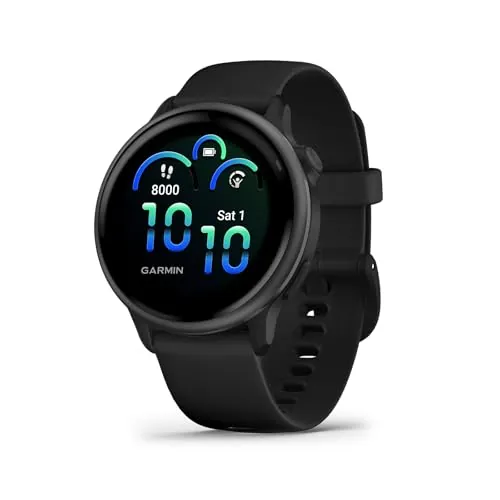
The signs are positive. It has a lightweight 47 g design, a silicone band, and an AMOLED screen in a 46 mm case. Reviews often describe it as light and comfortable for training and daily wear. Its comfort score of 88 suggests it should suit regular use well, though wrist size and preference still matter.
Does the Garmin Forerunner 265 offer good value for money?
It appears to offer solid value if you will use its training and recovery tools. The value score of 84 reflects a product that is not budget-priced but offers a broad feature set, strong battery life, quality GPS, and high customer satisfaction. For casual users who only need basic step counting, it may be more watch than necessary.
What are the main limitations of the Garmin Forerunner 265?
The main limitations are usability complexity and the fact that advanced health-style metrics are estimates. Some reviews also mention that Garmin Connect workflows can feel basic or less intuitive in certain training setups. In addition, safety messaging features depend on a paired smartphone and network coverage, so they are not fully standalone.
How does the Garmin Forerunner 265 compare with other fitness smartwatches?
Within its category, it appears more training-focused than general lifestyle smartwatches. Its strongest areas are fitness support, recovery insights, data depth, GPS capability, and battery life. Its weaker area is simplicity, as the feature set can take time to learn. That makes it better suited to active users than to buyers who mainly want basic smartwatch functions.
Are the health and recovery claims for the Garmin Forerunner 265 well supported?
The claims should be viewed as informed estimates rather than medical measurements. Garmin explicitly states that certain data is intended to be a close estimation of tracked metrics. The evidence quality score of 80 suggests a fairly credible feature set for consumer fitness use, but not a clinical standard for diagnosing or managing health conditions.